
By Patagonia Encantadora / April 27, 2026
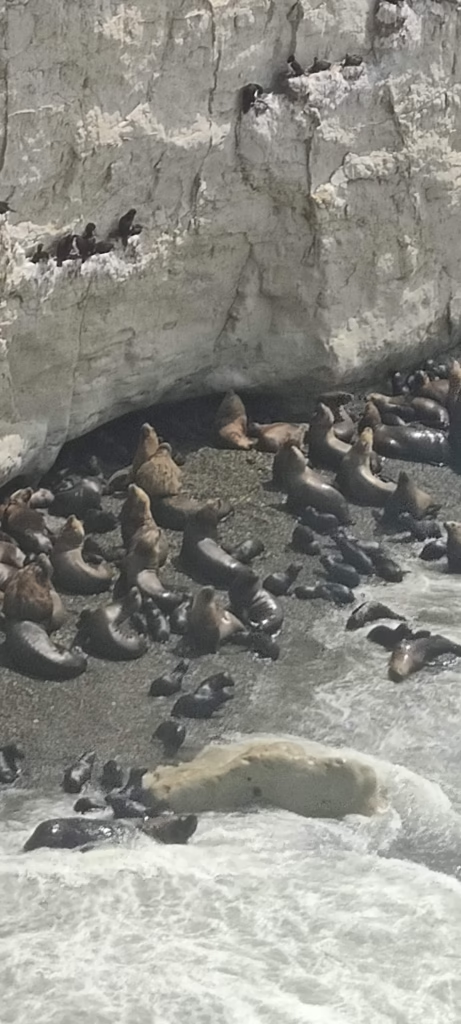
There are places you visit out of obligation. Also, there are places you visit out of curiosity. However, Punta Loma belongs to a third category. It changes your pace the moment you step out of the car. The Punta Loma sea lions and their surrounding nature reserve offer a direct way to see Patagonian coastal wildlife up close. Consequently, it is one of the best places to observe marine fauna in its natural habitat near Puerto Madryn.
The Punta Loma Nature Reserve sits 15 to 17 kilometers south of Puerto Madryn. In practical terms, that means a 20-minute drive along the coastal road bordering Golfo Nuevo. Furthermore, the road ends with a gravel stretch that naturally slows down traffic.
The signs ask drivers to stay under 60 km/h. At first, it looks like a standard traffic warning. However, once you are on the road, it feels more like an invitation to slow down and enjoy the landscape.
One of Chubut’s Oldest Protected Nature Reserves
Chubut Province created Punta Loma in 1967. As a result, it became one of its first nature reserves. Today, over five decades later, the area still keeps a quiet seriousness.
In addition, the infrastructure stays basic and functional. This happens because local authorities built it entirely around conservation rather than mass tourism.
The logistical layout is straightforward:
- Entry Checkpoint: Visitors pass a control post and pay the entrance fee here. Note that the site only accepts electronic payment. Therefore, you cannot use cash on-site.
- Visitor Area: A kilometer past the checkpoint, you will find a small parking lot, a ranger station, and the start of the wooden walkways.
- Park Rangers: Stationed on-site throughout the day, rangers gladly share updated information about daily wildlife behavior and weather conditions.
The Punta Loma Sea Lions: Dominant Males Weigh 350 Kilos
The Punta Loma sea lions colony (Otaria flavescens) is the central feature of the reserve. Unlike seasonal resting spots along the Atlantic coast, this group of South American sea lions stays here all year round.
From the main lookout point on a high cliff, you can spot the colony’s hierarchy easily:
- The Males: Large adult males reach up to 350 kg. Because they carry a prominent mane, they spend considerable energy defending their territory on the rocks.
- The Females: Smaller in size, adult females weigh between 130 and 140 kg. In contrast to males, they have lighter coats and move much more agilley in the water.
In addition, watching them on land reveals an interesting detail. Unlike true seals, sea lions can rotate their hind flippers forward. Therefore, they walk on all four limbs over the rocky shoreline. As a result, they actually move with surprising speed before plunging into the ocean.
Two Trails, Two Perspectives on the Reserve
The site features two self-guided paths for visitors:
- The Main Lookout Trail: This primary path leads directly to the upper viewing platform above the colony. It gives clear lines of sight for wildlife photography. While the sea lions rest below, South American cormorants and rock cormorants nest on the vertical clay cliffs directly above them.
- The Northeast Trail: Alternatively, this second trail follows the edge of the headland toward the northeast. It takes longer to walk. However, it sees far less foot traffic and opens up a broader view of the Golfo Nuevo coastline.
Seasonal Changes: Summer Breeding and Pups
Although the colony stays here year-round, its rhythm changes with the seasons. Specifically, summer marks the breeding season:
- Territorial Fights: Adult males build their harems during this period. As a result, visitors can hear frequent vocal displays and witness physical clashes along the shoreline.
- Newborn Pups: Pups arrive between December and January, weighing roughly 12 to 15 kg. They carry a dark coat during their first months. Consequently, they gather in small groups near the shallow tide pools while their mothers hunt in the gulf.
Environmental Rules and Regulations
The reserve enforces strict protection rules to prevent habitat damage:
- No Beach Access: Park regulations strictly prohibit access down to the coast to avoid disturbing the animals.
- Restricted Foot Traffic: Visitors must stay on the marked wooden walkways at all times. Because stepping onto the surrounding soil damages native shrubs, it also speeds up cliff erosion.
- Prohibited Items: Open fires, smoking, and eating along the trails are completely forbidden.
Access and Distance from Puerto Madryn
Reaching Punta Loma takes a bit of basic planning:
- Distance: The reserve is located 15 to 17 km south of downtown Puerto Madryn.
- Travel Time: Overall, the drive takes about 20 minutes under normal road conditions.
- Transport: No public bus line connects the city to the reserve. Therefore, you will need a private vehicle, a taxi, or a bike.
- Payment Method: Remember to bring a card or another electronic payment method for the entrance gate.
Final Notes
Punta Loma is a straightforward place. It holds a permanent sea lion colony, nesting sea birds on vertical cliffs, and a protected view over Golfo Nuevo that has barely changed since 1967. Overall, it works as a real window into the region’s marine life, just twenty minutes outside the city.