
Most travelers who arrive in Puerto Madryn ask the same two questions first: how do I visit Peninsula Valdes, and where can I see the penguins at Punta Tombo? While those are incredible wildlife experiences, taking a Lower Chubut Valley tour offers a completely different and compelling side of the region just a short drive inland.
But Chubut has another side, less photographed yet just as compelling, that unfolds a short drive inland: the Lower Chubut River Valley, known locally as the VIRCh (Valle Inferior del Rio Chubut).
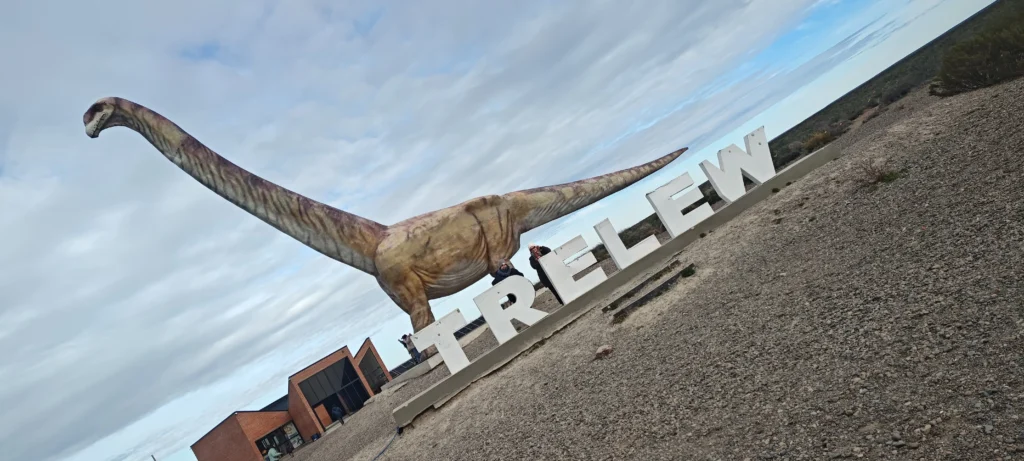
I worked this route recently as a guide for Dos Oceanos Tourism Agency, leading a half-day excursion for seven travelers , a family of five and two solo guests. Here’s what that afternoon looked like, and why this Lower Chubut Valley tour deserves a spot on your Patagonia itinerary.
If you’re planning what to do in Puerto Madryn on a day away from marine wildlife, this route blends Welsh heritage, world-class paleontology, and an unforgettable tea time into a single, relaxed afternoon.
Setting Off South at Midday
Our group departed right at 12:00 PM, after pickups from accommodations around Puerto Madryn. We headed south under the cool, crisp weather typical of the coast, the kind of chill that’s always sharper right along the shoreline. Once conversation about the day ahead picked up, though, nobody noticed the cold for long.
That mix of curiosity and mild uncertainty is something I see on almost every Lower Chubut Valley tour. Most visitors aren’t quite sure what to expect from the river valley , and that element of surprise ends up being one of the trip’s biggest rewards.
Playa UniOn: Chubut’s Open Ocean Coast
Our first stop was Playa Unión, where guests almost always ask the same question: how is this beach different from the ones in Puerto Madryn?
The contrast is obvious the moment you step onto the sand:
- Puerto Madryn: fine sand beaches sheltered inside Golfo Nuevo, which keeps the water calm and the wind gentler.
- Playa Unión: coarser sand and an open Atlantic coastline, giving the whole landscape a rawer, wilder feel.
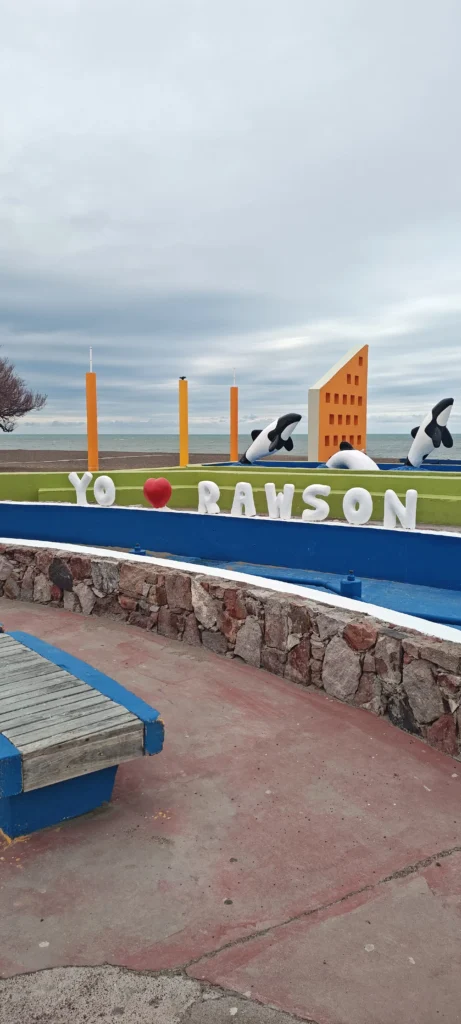
We walked the shoreline for about twenty minutes, taking in the stronger breeze and watching a handful of distant fishing boats. It’s a good stretch for photos and for realizing that Chubut’s coast isn’t one single landscape, it changes character block by block.
The Buzz of Rawson Port
From Playa Unión, we drove slowly through the port area of Rawson so the group could take in the activity on both sides of the road: on one side, the docks where yellow-hulled fishing boats tie up, essential to the local red shrimp fishery , and on the other, traditional stalls selling fresh catches straight to residents.
This short stretch gives visitors a genuine look at the valley’s real economy. Fishing here isn’t staged for tourists; it’s the industry that keeps the whole region running, and it’s usually where the most interesting questions come from guests who live far from the coast.
Trelew and the MEF: Home of Patagonia’s Giant Dinosaurs
Leaving the coast behind, we turned west toward Trelew, the commercial heart of the Lower Valley, for the most anticipated stop of the day: the Egidio Feruglio Paleontological Museum, known locally as the MEF and widely regarded as one of Patagonia’s top scientific attractions.
What to Expect Inside the MEF Museum
The visit opens with a short video on the geological history of Patagonia, which sets up everything that follows. From there, a self-guided, chronologically ordered circuit takes visitors through the exhibition halls.
- The lower level: mounted dinosaur skeletons with detailed bilingual signage.
- The main hall: the museum’s true centerpiece, home to the giant skeletons that earned the MEF international recognition.
Standing inside the main hall is Patagotitan mayorum, one of the largest land animals ever discovered. Photos don’t quite prepare you for the scale, it’s something you have to feel from underneath the skeleton to fully grasp.
After viewing the giant from an upper mezzanine, the path continues to a live restoration laboratory, where large glass windows let visitors watch paleontologists cleaning and preserving real fossils in real time, a detail that consistently captivates younger travelers.
Family tip: the exhibits are protected by motion sensors for conservation, so keep a respectful distance from the displays. Plan for 50 to 1.5 hours to explore the museum at a comfortable pace.
The Farms Route: A Hidden Scenic Byway
Once the group regrouped outside the museum, we headed toward Gaiman, but instead of the main highway, we took a detour I always look forward to: Provincial Route No. 7, known locally as the Ruta de las Chacras, or Farms Route.
This paved road winds through the back of the agricultural valley, past tall poplar trees, irrigation canals, and working farms that still carry the legacy of the original 19th-century Welsh settlers. It’s a quiet, unhurried drive that contrasts nicely with the energy of the museum and eases the group into Gaiman.
Gaiman: Welsh Heritage, History, and Traditional Tea
We arrived in Gaiman with a clear destination: a traditional Welsh tea house, where a table was already set for the group.
The Traditional Welsh Tea Ritual
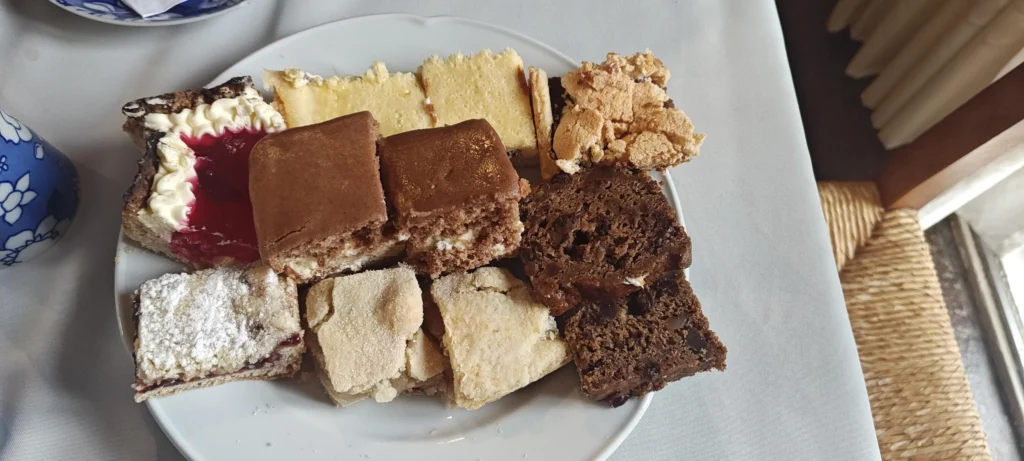
For over an hour, the group worked through a table loaded with artisanal cakes, including the iconic Torta Negra Galesa, or Welsh Black Cake ,tarts made with regional fruit preserves, freshly baked homemade bread, butter, and hot tea, all served in a warm, unhurried setting. This relaxed meal is, often, the part of the day guests talks about most.
A Historic Stroll Through Gaiman
After tea, a short walking tour covers a few of Gaiman’s key historic landmarks:
- The First House (1874): the town’s oldest standing building and a direct link to the early years of the Welsh colony.
- Camwy School (1908): a reminder of how central education was to the original settlers.
- The historic railway tunnel: a classic photo stop that once connected the inland valley to the coastal ports.
Returning to Puerto Madryn: Is This Tour Right for You?
We headed back to Puerto Madryn as the sun started to set. Compared to a full-day excursion like Peninsula Valdes ( which typically runs around 10 hours and starts early in the morning ) this Lower Chubut Valley tour moves at a far more relaxed pace: fewer hours on the road, but no shortage of history and culture packed into the afternoon.
On the drive back, conversation flowed easily. A few passengers had gone whale watching in Puerto Piramides the day before and enjoyed comparing the two experiences , completely different, yet complementary. What stuck with them most was understanding how these towns came to be, why Welsh settlers chose this valley, and how the region’s human history connects with its wildlife seasons.
If you’re planning a Patagonia trip and want an excursion beyond marine wildlife, this Lower Chubut Valley tour is well worth the half-day. It brings together history, science, and local gastronomy in a single, memorable afternoon.